

"Education is the most powerful weapon which we can use to change the world”
- Nelson Mandela -
Maya Hammoud, Teach For Lebanon Fellow story
Right now, Maya Hammoud is in Mount Lebanon. There is no classroom, no STEAM lab, no students to reach. She has built herself a small daily routine just to hold the shape of a day together. Communication with her class is partial. Most connections remain incomplete.
This is not new. It is the second time displacement has stopped everything she has built.
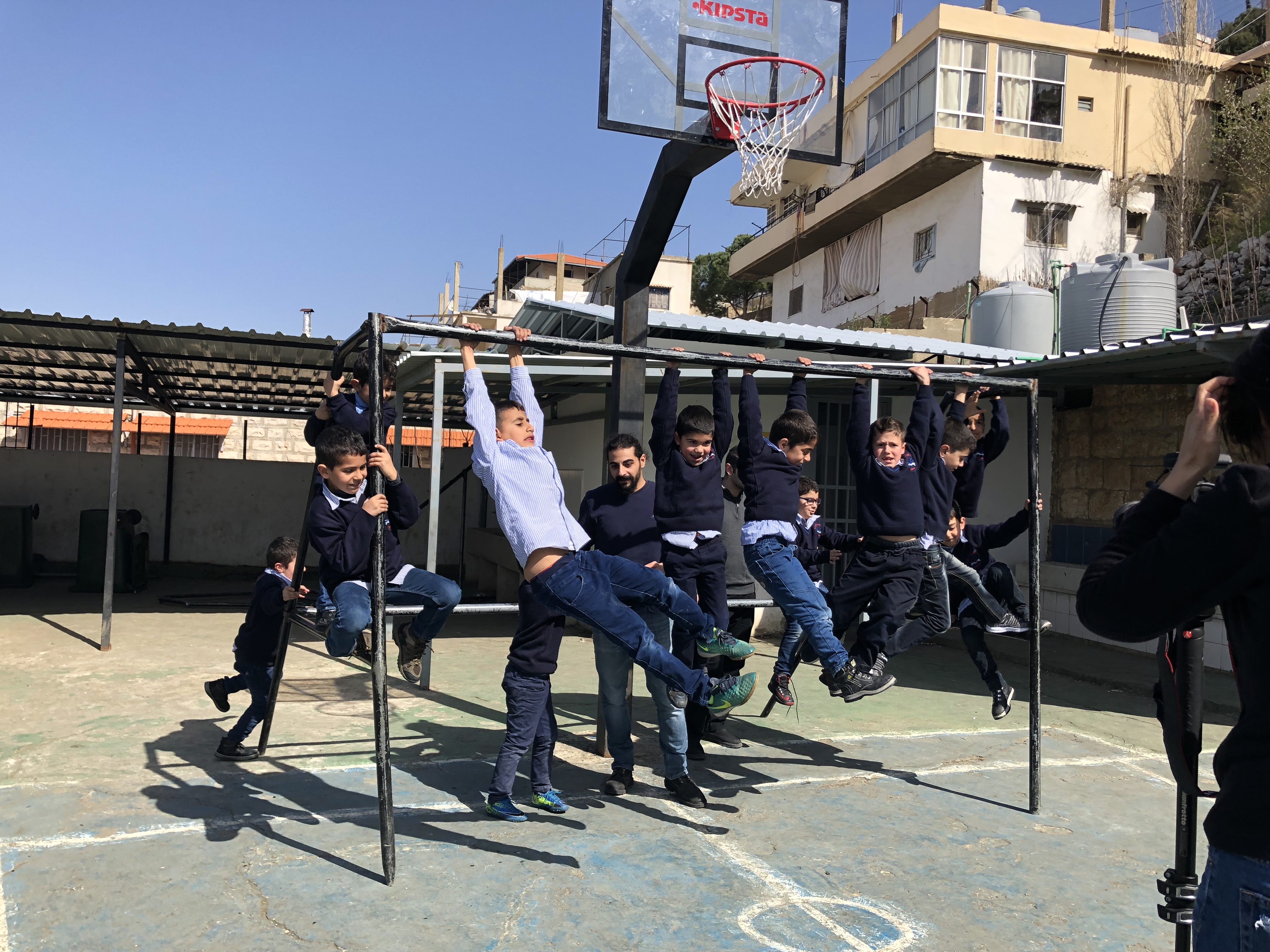
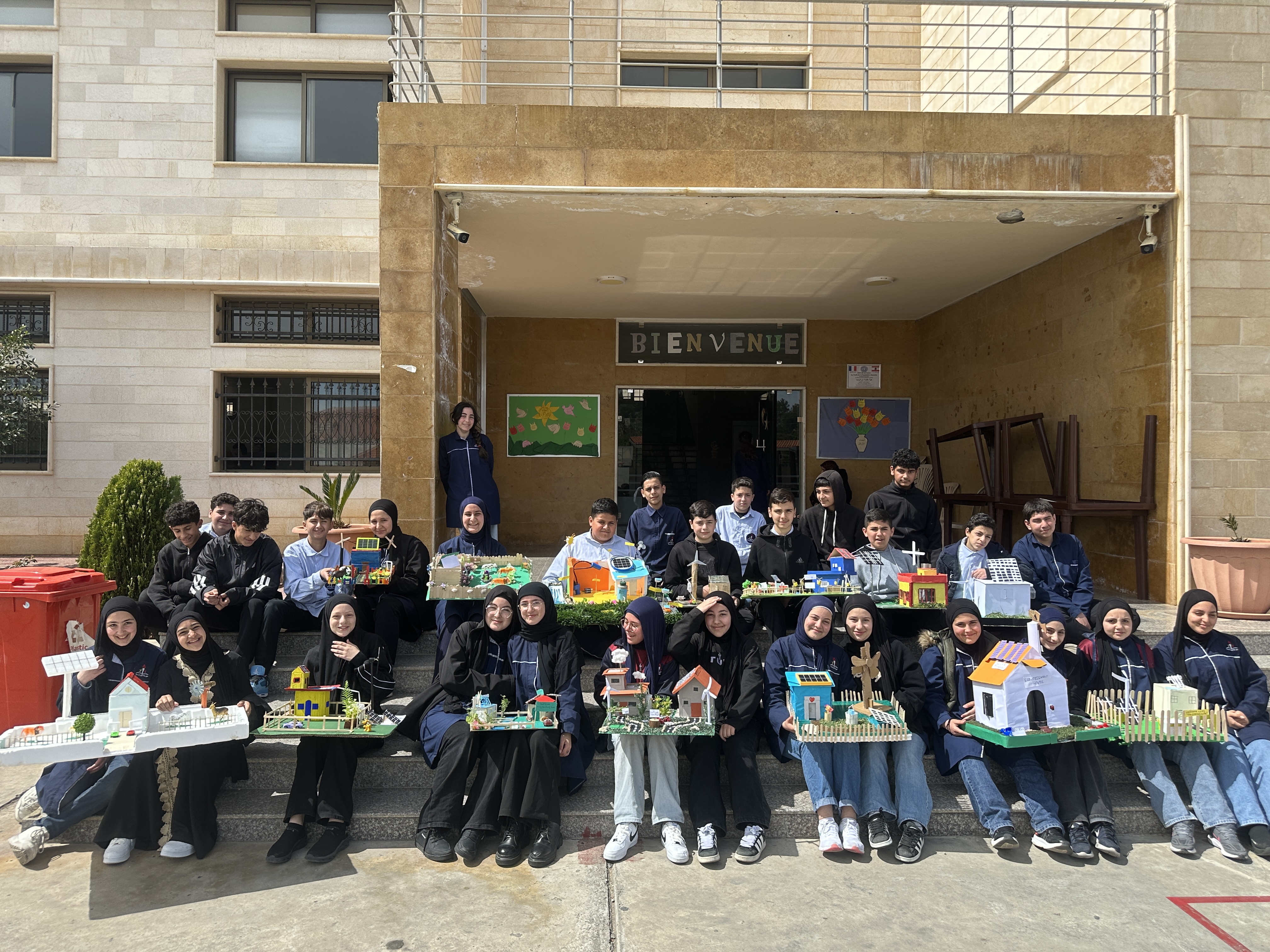
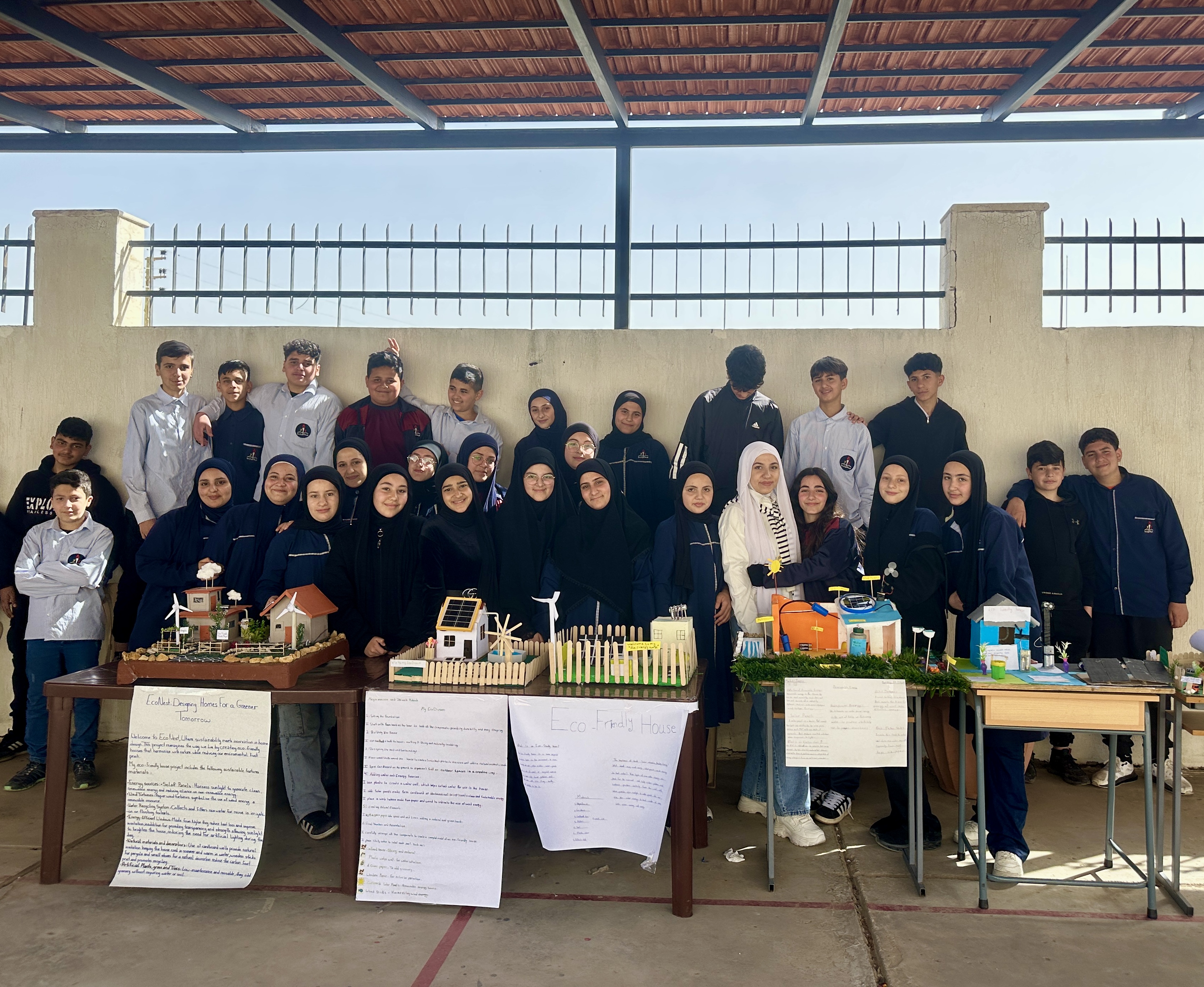
In Tibnin, South Lebanon, Maya turned a classroom full of students who had lost their homes into a community of designers and problem-solvers. Students brought rubble from their destroyed homes into the classroom and built sustainable housing prototypes from it. Parents came with carpentry skills and construction knowledge. An exhibition drew more than 500 people. UNICEF, the European Union, and the Ministry of Education took notice, and the project became a fully funded STEAM Lab under the Teaching and Learning Innovation Fund. Maya went on to be elected to the UNESCO SDG4 Youth and Student Network Executive Committee, representing the Arab region.
It is easy to frame displacement as a pause. As if the work is simply waiting somewhere, intact, ready to resume. It is not.
Earlier this year, Maya completed the Green STEAM training through the UN Sustainable Development Solutions Network Schools for Goal 7 program. The implementation phase was ready: devices prepared, licenses activated, and students introduced to the platform. They were going to participate in a global student showcase connected to the UN Economic and Social Council Youth Forum (ECOSOC), one of the first experiences of its kind for students in that school and region.
Displacement happened at the exact moment they were supposed to begin. The program did not pause. It expired.
Before students could engage with a single session, it was gone. Not postponed. Not saved for later. Gone.
This is what displacement does to education initiatives that depend on continuity. It does not simply interrupt them; it unravels them. Licenses expire. Momentum drains. The window that took months to open closes quietly while no one is looking.
And for Maya, this was the second time. The STEAM lab had already been disrupted once before. They rebuilt. Regained momentum. And then it stopped again. Each restart, she says, costs more than the last, not just in time, but in the trust that building something here is worth the risk of losing it again.
When initiatives collapse repeatedly, the system traps both teachers and students in a loop. Not a pause, a loop. Every time the ground stabilizes enough to build, the next disruption resets the counter. Teachers who have already proven what is possible are asked, again, to prove it from zero.
Maya is already doing that work. She is mapping where students are, whether online learning is even possible for them, and what their conditions look like.
Leadership right now doesn't feel like having a plan. It feels like deciding not to let everything stop completely.
She is reaching parents. She is holding continuity in whatever fragments are available. She is thinking a step ahead of a situation that does not yet have a next step.
A student named Sabine told Maya she could not open a book anymore. Maya asked her to try ten minutes a day. Weeks later, displaced, Sabine reached out. She had taken her science books with her and was still doing the ten minutes every day. She asked if Maya was safe before she mentioned anything else.
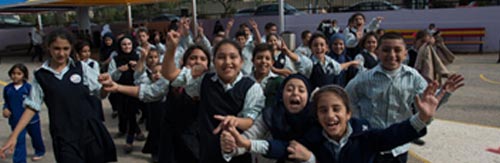
Another student ran toward Maya in the street and held on. Her mother said it was the first time she had seen her daughter happy since the displacement. Ali's mother sent a message: he is safe, he says hi, and he cannot wait to come back to school. Read Ali’s healing journey here.
These are not small things. They are evidence that what was built in that STEAM lab did not only exist in the physical space. It existed in how students learned to move through uncertainty, and they carried it with them when the space disappeared.
Even so, the loss of the program remains deeply felt. Students who were ready to present their work to a global audience at the ECOSOC Youth Forum did not get that chance.
Maya has answered the question of resilience already, twice. The more pressing question is what systems, funders, and partners are prepared to do differently. Crisis-responsive education requires crisis-responsive infrastructure: funding that can flex, licenses that can be extended, showcases that can hold space for students whose timelines are shaped by conflict rather than calendars. The next time a ceasefire holds long enough for a STEAM lab to take root, the conditions around it need to be ready to hold, too.
Learning is not only what happens inside stable systems. It is also what continues beyond them. But it should not have to survive entirely on its own.
Number of fellows: 5
"Education is the most powerful weapon which we can use to change the world”
- Nelson Mandela -